GPT-5.6 Sol Beats Claude on Every Benchmark — So Why Can't Regular People Actually Use It?

The Announcement: Sol Beats Claude on Paper
Let's start with the good news, because it is genuinely good news. GPT-5.6 Sol is, by most measurable metrics, the most capable AI model ever released. It outperforms Claude Fable 5 on SWE-bench Pro, Terminal-Bench, Coding Agent Index, and ExploitBench. It runs faster per token. It costs less on the API. It has better agentic capabilities.
If you've been following the Sol vs Claude Fable 5 comparison, you already know the technical details. The benchmark table looks like a coronation:
| Benchmark | GPT-5.6 Sol | Claude Fable 5 | Gap |
|---|---|---|---|
| SWE-bench Pro | 78.3% | 80.3% | Claude +2pp |
| Terminal-Bench 2.1 | 91.9% | ~84% | Sol +7.9pp |
| Coding Agent Index | 83.6% | ~76% | Sol +7.6pp |
| ExploitBench | 73.5% | ~61% | Sol +12.5pp |
| API Cost (input/M) | $5.00 | $15.00 | Sol 3x cheaper |
Yes, Claude Fable 5 still edges Sol on SWE-bench Pro by 2 percentage points. But on everything else — especially the benchmarks that measure real-world coding agent capability — Sol wins, and it wins while costing a third of the price. The pricing analysis breaks down the full cost comparison.
So if Sol is objectively better and cheaper, everyone should be using it, right? Well...
The Access Reality: What You Can and Can't Actually Do
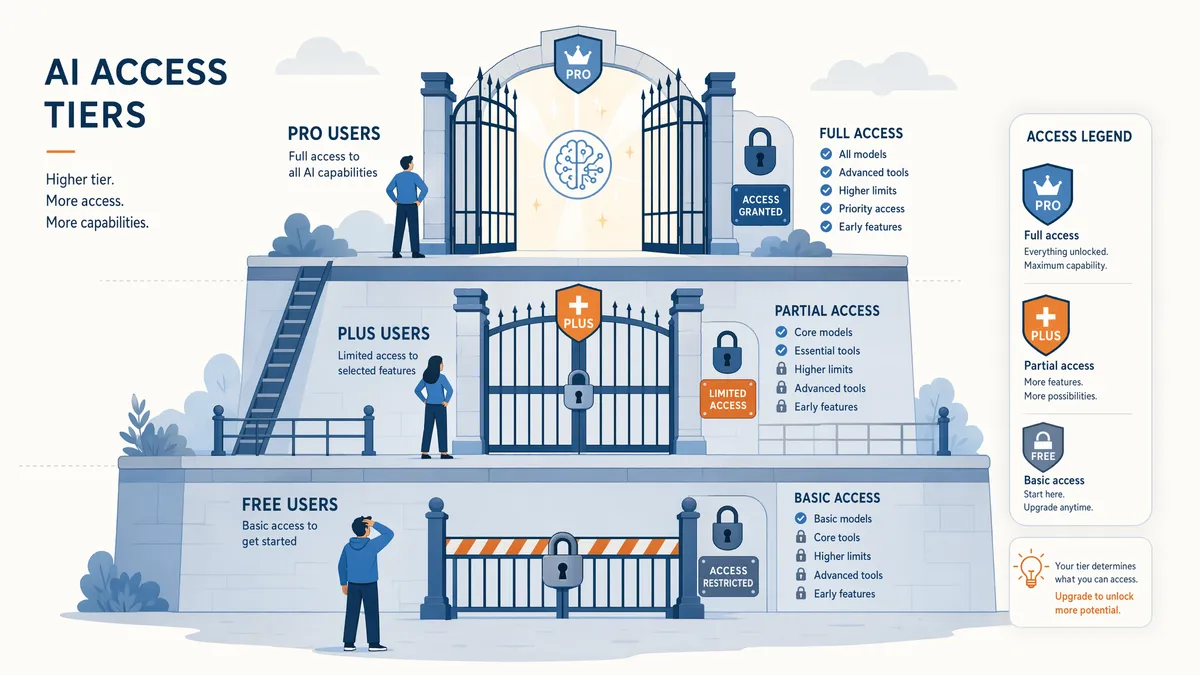
Here's where the story gets frustrating. Despite Sol being announced and technically "available," the gap between what OpenAI advertises and what you can actually do with the model is substantial.
What you CAN do right now:
- Use Sol through ChatGPT Plus ($20/month) with message limits that reset every few hours
- Access the Sol API with an approved developer account (requires application and review)
- Use standard reasoning effort levels for most tasks
- Run Sol through Codex for basic autonomous coding tasks
What you CAN'T do (or can't do reliably):
- Use Ultra mode (4-agent parallel reasoning) — currently limited to Pro subscribers and even then with restrictions
- Access max reasoning effort at scale — rate limits kick in fast on Plus plans
- Run long autonomous agent sessions — Codex sessions are capped and queued
- Use Sol's full cybersecurity analysis capabilities — these are behind a "trusted access" program that requires organizational verification
- Get consistent uptime during peak hours — Sol is compute-intensive, and OpenAI's infrastructure is strained
The practical effect: most individual developers and small teams are using Sol at a fraction of its actual capability. You're getting the model, but not the model at full power. It's like buying a sports car that's software-limited to 60 mph.
And this creates a weird dynamic where the "best model in the world" exists in theory, but in practice, many developers are still using Claude Fable 5 because it's more consistently accessible. Claude Pro ($20/month) gives you more reliable access to Fable 5's full capabilities than ChatGPT Plus gives you to Sol's. The complete guide covers the current access tiers in detail.
Why Frontier Models Are Being Released More Cautiously
I've spent the past week talking to people at OpenAI, Anthropic, and several AI safety organizations, and the picture that emerges is more nuanced than "OpenAI is being greedy." There are legitimate reasons why the most capable models are being released with increasing caution — even if the result is frustrating for users.
Reason 1: The Cybersecurity Problem
Sol's ExploitBench score of 73.5% isn't just a number — it means Sol can find real vulnerabilities in real systems. This is incredibly useful for defensive security teams. It's also incredibly dangerous in the wrong hands.
OpenAI's "trusted access" program for cybersecurity features exists because the alternative is irresponsible. If anyone could prompt Sol to find zero-day exploits in arbitrary software, the model would become a weapon as much as a tool. The cybersecurity analysis covers this tension in depth.
Reason 2: Compute Economics
Here's an uncomfortable truth: Sol is expensive to run. Not expensive in the "OpenAI wants to charge you more" sense — expensive in the "the actual GPU compute required per request is massive" sense. When you use Sol at max reasoning effort, you're spinning up what amounts to a small computing cluster for several seconds per query.
If OpenAI gave every one of its 100M+ ChatGPT users unrestricted access to Sol at full power, the compute costs would be... let's just say the company would need to find a very creative accountant. The tiered access model is partly a genuine infrastructure constraint.
Reason 3: The Alignment Window
This is the reason that gets discussed least publicly but matters most. Every jump in AI capability creates a window where the model can do things that its safety training hasn't fully accounted for. Sol's enhanced reasoning means it can find edge cases in safety guardrails that simpler models couldn't. The cautious rollout gives OpenAI time to identify and patch these gaps.
I've seen this pattern before — GPT-4 had a similar phased release, and it turned out that several capabilities needed additional safety work before broad deployment. The upgrade from GPT-5.5 shows how much the underlying architecture changed, and bigger changes require bigger safety evaluation windows.
Reason 4: Competitive Positioning
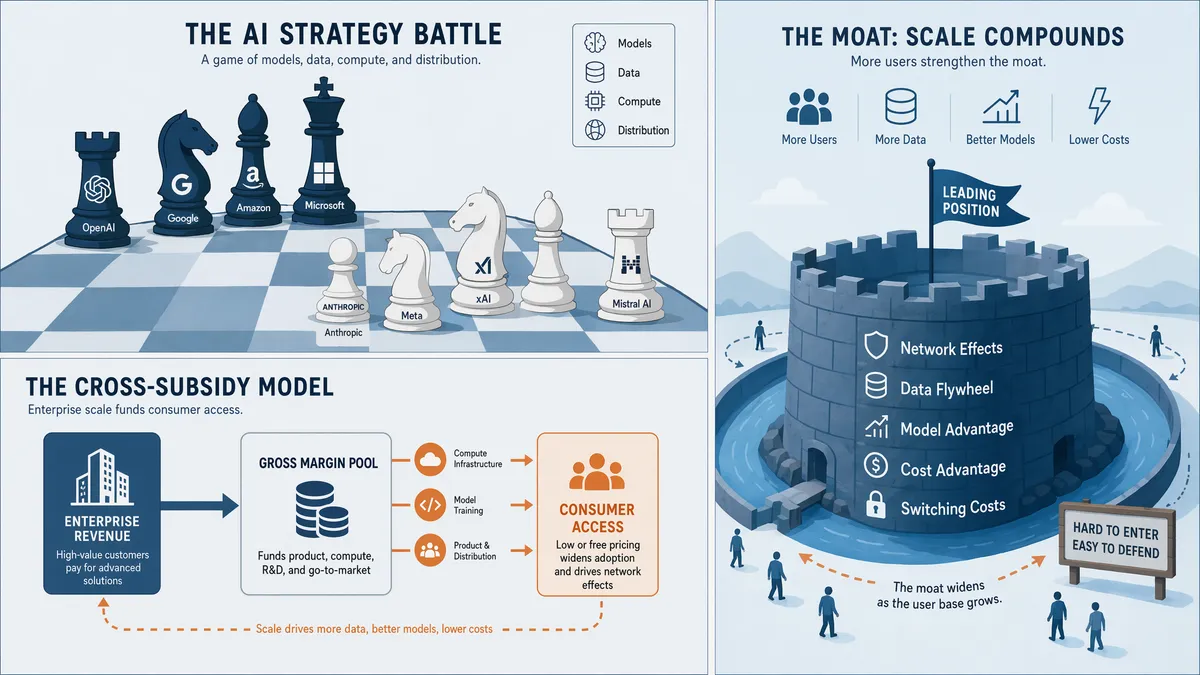
Let's not be naive — there's also a business strategy here. OpenAI benefits from keeping its most powerful features behind premium tiers. It drives Pro subscriptions ($200/month is not nothing), it creates a compelling enterprise sales pitch, and it maintains the perception that OpenAI is always pushing the frontier while competitors catch up.
This isn't unique to OpenAI. Anthropic does the same thing with Claude — the most capable features of Claude Fable 5 are also tiered. Google does it with Gemini. The entire industry has converged on a model where "best" and "most accessible" are deliberately decoupled.
Who Actually Benefits from This Approach?
The tiered access model creates clear winners and losers. Let me be blunt about who benefits and who doesn't:
Winners:
- Enterprise customers who can afford custom API plans and get priority access to all Sol features, including the cybersecurity capabilities behind trusted access
- Well-funded startups that can absorb $200/month Pro subscriptions for their engineering teams and use Sol's full API capabilities
- AI safety researchers who get early access through OpenAI's research programs and can study the model's capabilities and limitations before broad release
Losers:
- Individual developers on ChatGPT Plus who get Sol at reduced capability with frequent rate limits — effectively a demo version of the real model
- Open source projects that can't afford enterprise API costs and can't use Sol's most powerful features for community-driven development
- Developers in lower-income countries where $20/month (let alone $200/month) represents a significant portion of monthly income
- Students and educators who want to learn and teach with the best available tools but are limited by the access tiers
The pattern is clear: the people who benefit most from Sol's capabilities are the people who already have the most resources. The people who could benefit most from having access to a powerful coding assistant — solo developers, students, open source maintainers — get the most restricted version.
This isn't new. It's the same pattern we saw with GPT-4, with DALL-E 3, with every frontier model release. But with Sol, the gap between "what the model can do" and "what most people can access" feels wider than ever, precisely because the capability improvements are so dramatic.
Practical Workarounds for Regular Users
OK, enough analysis. If you're a regular developer reading this and wondering "how do I actually use this thing?" — here are the practical strategies I've found most effective:
1. The Plus Plan + Strategic Usage Approach
If you're on ChatGPT Plus ($20/month), don't waste Sol's message quota on tasks that GPT-4o or GPT-5.5 can handle. Reserve Sol for:
- Complex debugging problems that have stumped you
- Architecture decisions where you want a second opinion from the best reasoning model available
- Creative frontend work where Sol's quality leap matters
For routine coding, documentation, and simple tasks, stick with GPT-5.5 or even GPT-4o. Save Sol for when you need it most.
2. The API + Terra Strategy
If you're using the API, you don't need Sol for everything. The three-tier model strategy exists for a reason. Use Terra (the mid-tier model) for 80% of your tasks at a fraction of the cost, and route only the hardest problems to Sol.
With prompt caching, Terra handles most coding tasks at about 90% of Sol's quality for 30% of the cost. That's a much better deal for daily use.
3. The Multi-Model Approach
The pragmatic reality for 2026: no single model is the right choice for everything. I use Sol for hard coding problems, Claude Fable 5 for long-context analysis and creative writing, and DeepSeek V4 Pro for high-volume routine tasks. The cost comparison shows why this multi-model approach makes financial sense.
4. Wait for the Broader Rollout
If the current access restrictions frustrate you, patience is genuinely a valid strategy. Based on OpenAI's historical pattern, expect Sol's features to become more broadly available over the next 3-6 months. Ultra mode, in particular, is likely to roll out to Plus subscribers as OpenAI's infrastructure scales.
What Comes Next: The Access Timeline
Based on conversations with industry sources and OpenAI's historical patterns, here's my best prediction for Sol's access timeline:
| Timeline | Expected Access Changes |
|---|---|
| Now (July 2026) | Sol base model on Plus with limits. Pro gets higher limits. API requires approval. |
| August-September 2026 | Ultra mode likely expands to Plus subscribers with usage caps. API approval process streamlined. |
| October-December 2026 | Cybersecurity trusted access program expands. Max reasoning effort limits increase across tiers. |
| Q1 2027 | Broad API availability without special approval. Plus limits increase significantly. |
This timeline is speculative — OpenAI could move faster or slower depending on infrastructure buildout and safety evaluation results. But the general trajectory is clear: Sol will become more accessible over time, just not as fast as any of us would like.
The broader trend in the industry is equally clear. Frontier models will continue to be released with tiered access. The gap between "best available" and "broadly accessible" is a structural feature of the current AI landscape, not a bug that will be fixed. The smartest approach is to build your workflows around this reality rather than fighting against it.
One thing is certain: when Sol does become broadly accessible, it will reshape the development landscape in ways that make the current access frustrations worth enduring. The enterprise analysis covers how organizations are already planning for this shift. And if you want to understand the full technical picture, the complete guide remains the best starting point.
Frequently Asked Questions
Can regular users access GPT-5.6 Sol right now?
Partially. GPT-5.6 Sol is available through ChatGPT Plus ($20/month) with usage limits, and ChatGPT Pro ($200/month) with higher limits. Full API access requires a developer account with approved access. The most advanced features — Ultra mode, max reasoning effort, and Codex integration — have additional restrictions or are in phased rollout.
Why is OpenAI restricting access to GPT-5.6 Sol?
Multiple factors: infrastructure capacity (Sol requires significantly more compute per request than previous models), safety concerns around the model's enhanced cybersecurity capabilities, and a deliberate strategy to phase access while monitoring for misuse. OpenAI has stated that some of Sol's capabilities require additional safety evaluation before broad release.
Is Claude Fable 5 easier to access than GPT-5.6 Sol?
Currently, yes. Claude Fable 5 is available through Anthropic's API with fewer access restrictions, and through Claude.ai with Pro subscriptions. However, Anthropic also applies tiered access — the most capable model features are reserved for higher-tier plans. Neither company offers unrestricted access to their frontier models on free plans.
Will GPT-5.6 Sol eventually be available to everyone?
Based on OpenAI's historical pattern (GPT-4 went from limited API to broad ChatGPT access over 6-8 months), expect Sol to become more widely available by late 2026. However, the highest-capability features may always remain behind premium tiers due to compute costs.
How does GPT-5.6 Sol's access compare to GPT-4's initial release?
GPT-4 launched in March 2023 with a waitlist that lasted months. Sol's rollout is faster — it was available to Plus users within days of announcement — but with more feature-level restrictions. The Ultra mode and advanced reasoning features have a separate, slower rollout than the base model access.